
 Store Location

Blog
Dry Fruit Panjiri(Panjeri) Laddu, Health Benefits. Ingredients and Why You Should Eat It Daily

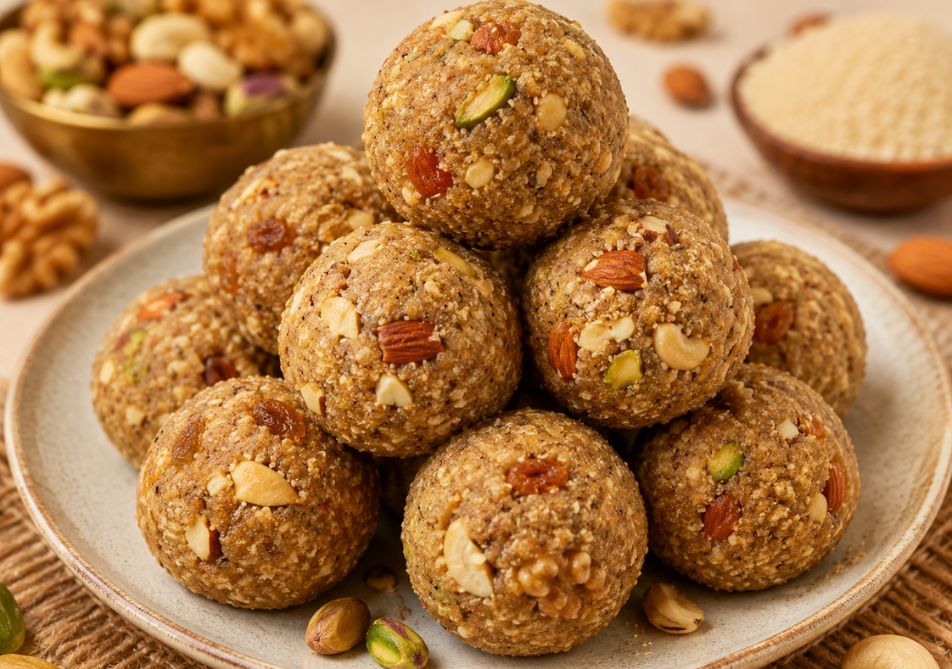
If you grew up in a North Indian household, chances are you’ve seen a big jar of panjiri sitting on the kitchen counter during winters. Whether it was your dadi making it after Janmashtami or your mom preparing a batch for new mothers in the family, panjiri has always been that one traditional preparation that bridges the gap between food and medicine.
But lately, the dry fruit version — popularly known as dry fruit panjiri laddu — has made a serious comeback. And honestly? It deserves every bit of the attention it’s getting.
What Is Dry Fruit Panjiri Laddu?
Panjiri is a traditional Punjabi preparation made from whole wheat flour (atta), ghee, sugar, and a generous mix of herbs and dry fruits. When shaped into laddus, it becomes easier to store and eat on the go.
The “dry fruit” version takes things up a notch. Instead of relying only on flour and ghee for nutrition, it’s loaded with almonds, cashews, walnuts, pistachios, raisins, melon seeds, and other powerhouse ingredients. Some recipes also include edible gum (gond), dry coconut, and warming spices like sonth (dry ginger), pipli, and cardamom.
The result? A small laddu that packs more nutrition than most fancy health bars you’ll find in a store.
Top Health Benefits of Dry Fruit Panjiri Laddu
1. Excellent for Postpartum Recovery
This is perhaps the most well-known use of panjiri laddus. New mothers are traditionally given these laddus during the first 40 days after delivery. Here’s why that makes complete sense:
The combination of gond (edible gum), ghee, and dry fruits helps repair tissues, supports lactation, and gives the body the warmth and energy it needs to recover. Dry ginger aids digestion, which is often sluggish after childbirth, and the natural sugars from dry fruits provide sustained energy without spiking blood sugar too sharply.
This isn’t just folklore — the ingredients genuinely support hormonal recovery, bone health (thanks to calcium from dry fruits and ghee), and iron replenishment (from raisins and melon seeds).
2. Powerful Energy Booster
Feeling drained by mid-afternoon? One dry fruit panjiri laddu can genuinely help. The complex carbohydrates from whole wheat flour and the healthy fats from ghee and nuts provide slow, sustained energy — not the sugar crash you’d get from a biscuit or a cup of tea.
Athletes, students, and people with physically demanding jobs have been quietly snacking on these for generations. It’s only now that the fitness world is catching up and calling it a “natural pre-workout.”
3. Strengthens Bones and Joints
Dry fruit panjiri laddus contain a natural combination of calcium, phosphorus, magnesium, and vitamin K — all crucial for bone density. Almonds and sesame seeds (often added to the mix) are particularly rich in calcium, while ghee supports the absorption of fat-soluble vitamins.
For older adults dealing with joint stiffness or early signs of osteoporosis, this is one traditional remedy that actually has nutritional logic behind it.
4. Boosts Immunity Naturally
The dry fruits in panjiri laddus — especially walnuts, almonds, and pistachios — are loaded with zinc, vitamin E, and antioxidants. These nutrients work together to strengthen the immune response and protect the body from seasonal infections.
Add warming spices like dry ginger, black pepper, and cinnamon to the mix, and you have a laddu that’s essentially a natural immunity protocol in edible form. No wonder grandmothers insisted on eating these through winter.
5. Supports Brain Health
Walnuts are famously good for brain health, and they’re a key ingredient in most dry fruit panjiri recipes. They contain omega-3 fatty acids and polyphenols that support cognitive function and may help with memory and focus.
Almonds add to this with their vitamin E content, which is associated with reduced cognitive decline. A couple of these laddus with your morning tea? Your brain will thank you.
6. Aids Digestion
Dry ginger (sonth) is a central ingredient in traditional panjiri, and it’s there for good reason. It stimulates digestive enzymes, reduces bloating, and soothes an irritated gut. Ghee, when consumed in moderate amounts, lubricates the intestinal walls and supports healthy bowel movement.
If you struggle with acidity or sluggish digestion in winter, panjiri laddus — especially the ones with hing (asafoetida) added — can provide gentle, natural relief.
7. Keeps You Warm in Winter
In Ayurvedic terms, most of the ingredients in dry fruit panjiri have a “ushna” (hot) quality, meaning they generate internal heat. Dry ginger, black pepper, long pepper (pipli), and ghee are all considered warming foods that help the body maintain temperature in cold weather.
This is why panjiri laddus are specifically a winter preparation in North India — they’re not just comfort food, they’re functional food designed for the season.
8. Natural Mood Lifter
Nuts and seeds contain tryptophan, a precursor to serotonin. Ghee, too, is believed in Ayurvedic tradition to support emotional balance. Many women report feeling calmer and more balanced during the postpartum period when they consistently eat panjiri — and this has a real nutritional basis.
Key Ingredients and What They Do
| Ingredient | Primary Benefit |
|---|---|
| Whole Wheat Flour (Atta) | Complex carbs, fiber, sustained energy |
| Pure Ghee | Fat-soluble vitamin absorption, joint lubrication |
| Almonds | Vitamin E, calcium, brain health |
| Walnuts | Omega-3s, cognitive support |
| Cashews | Iron, zinc, magnesium |
| Raisins | Natural iron, quick energy, antioxidants |
| Melon Seeds | Protein, magnesium, healthy fats |
| Dry Ginger (Sonth) | Digestion, warmth, anti-inflammatory |
| Gond (Edible Gum) | Postpartum healing, bone strength |
| Cardamom | Digestion, breath, natural sweetness |
| Dry Coconut | Healthy fats, fiber, immune support |
Who Should Eat Dry Fruit Panjiri Laddus?
Honestly, most people can benefit from them — but these groups especially:
Postpartum mothers — The traditional reason, and still the most valid one.
Children aged 5 and above — Great for bone development, energy, and immunity. Kids who are fussy eaters often love the sweetness.
Elderly individuals — Supports bone health, digestion, and provides easy-to-absorb nutrition.
People who work physically demanding jobs — A natural energy bar without artificial ingredients.
Those recovering from illness — The warming and nourishing ingredients help rebuild strength.
How Many Should You Eat Per Day?
Moderation is key. One to two laddus per day is ideal for most adults. Since they’re made with ghee and calorie-dense nuts, eating too many can lead to excessive calorie intake.
For postpartum mothers under traditional protocols, the intake is sometimes higher under the guidance of experienced family members or practitioners — but the general population should stick to one or two as a snack or post-meal treat.
A Quick Note on Store-Bought vs Homemade
The homemade version will always win. Commercial panjiri laddus often contain refined sugar, vegetable oil instead of desi ghee, and fewer dry fruits than the packaging suggests. If you can, make a batch at home — it keeps well in an airtight container for up to 3-4 weeks at room temperature, and longer in the fridge.
Final Thoughts
Dry fruit panjiri laddu is one of those traditional foods that doesn’t need a rebrand or a marketing campaign. It’s been quietly doing its job for centuries — nourishing mothers, warming bodies through harsh winters, and keeping families healthy in the most delicious way possible.
In a world full of processed snacks and expensive supplements, this humble laddu stands out as proof that the best nutrition often comes from the simplest, most time-tested ingredients.
So the next time you see a jar of panjiri at home, don’t pass it by. Grab a laddu. Your body will know exactly what to do with it.